
If your marketing feels like it isn’t landing, or you’re not sure you’re reaching the right people, it could be time to pause and clarify who your audience actually is.
Maybe you’ve always known you want to market to “young adults”, “business owners”, or “parents”. Let’s take it a step further. We’re talking about really knowing who you’re trying to reach – their priorities, their struggles, what makes them pause when they scroll, and what makes them click away. One of the simplest and most helpful tools for this is the customer persona!
What is a customer persona?
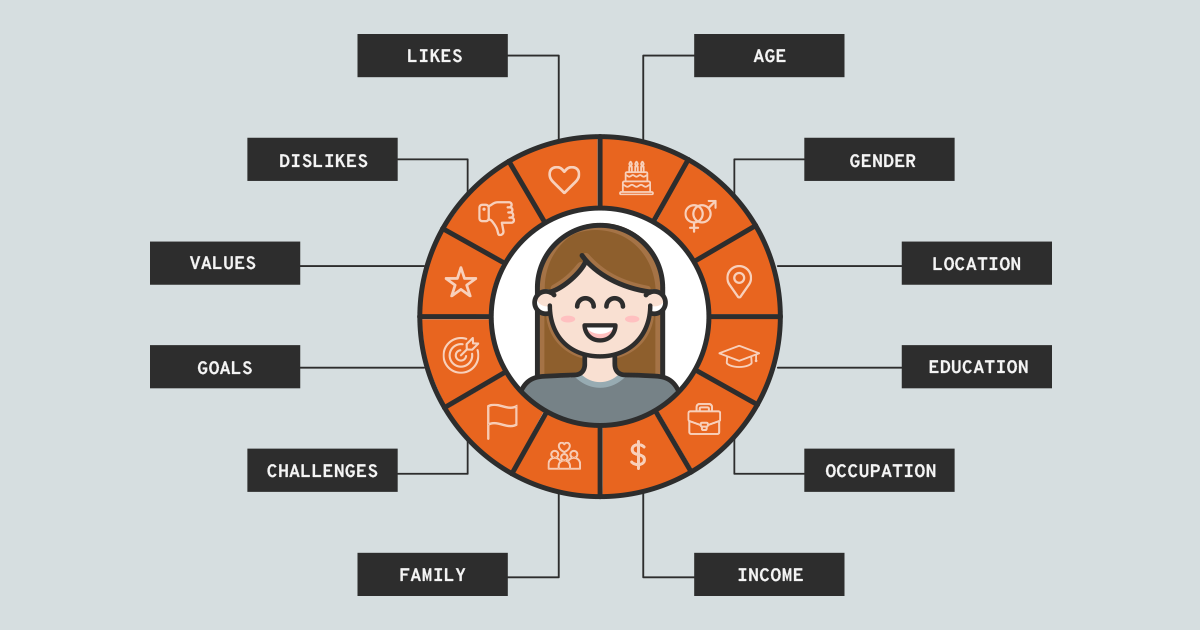
A customer persona is a fictional or realistic profile created of your ideal customer or target audience member. The persona can include things like demographics, digital habits, pain points, goals, behaviors, and more to help you understand them! It is a snapshot of one real person who embodies your target audience, but that person may represent many people.
We like to think of it as a “stand-in” – someone you can point to and keep in mind every single time you write that social media caption, design that brochure, or plan that digital campaign.
This really humanizes your audience and helps you be more creative and effective instead of feeling like you’re just talking to the void. Creating a customer persona is all about asking questions and doing a fun exercise to identify them!
A Customer Persona Example: Emily
Let’s say you’re a company launching an affordable meal subscription service. You want to reach busy professionals and working parents, but your marketing feels generic and isn’t converting well. Rather than trying to reach “women aged 30 to 50,” you narrow it down to someone specific. You build a persona.
Meet Emily
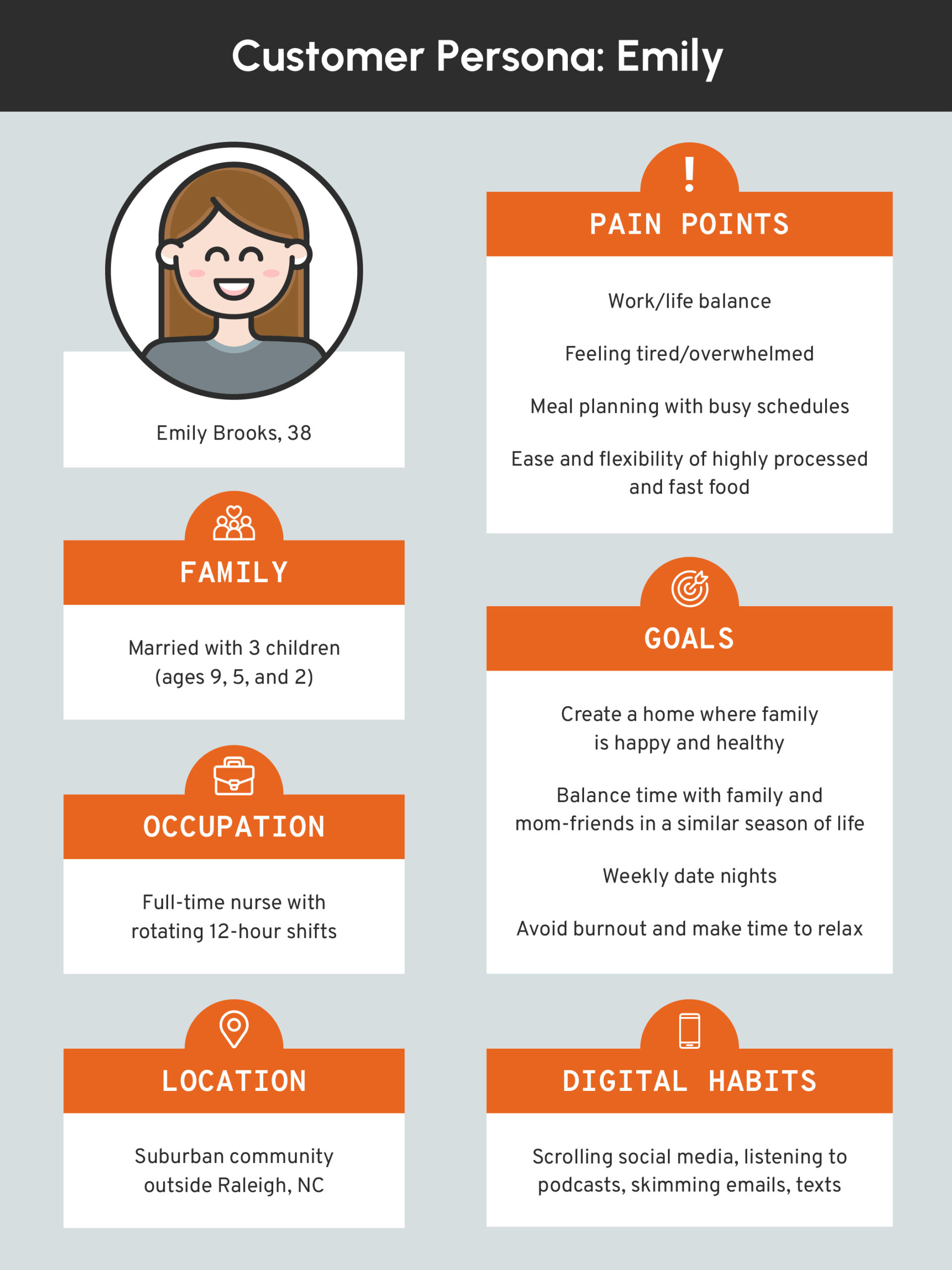
Name: Emily Brooks
Age: 38 Years Old
Family: Married with three children (ages 9, 5, and 2)
Occupation: Full-time nurse with rotating 12-hour shifts
Location: Suburban community outside Raleigh, NC
Pain Points:
- Constantly balancing home, work, and social life for herself and her kids
- Often feels tired or overwhelmed, and has little time for herself
- Meal planning can be difficult with their busy schedules, and cooking after a long shift feels like another chore
- She is health-conscious, so fast food and highly-processed frozen meals are not her preferred choice for feeding her kids, but she likes the ease and flexibility
Goals:
- Create a home where her family is healthy and happy
- Maintain a healthy balance and have time with her fellow mom friends in a similar season
- Keep her family rooted in the things that are important; go on weekly date nights
- Make time for breaks and relaxation to avoid burnout
Digital Habits:
- Scrolls Facebook and Instagram during breaks, late nights, or resting after a long day at work; she also goes to Pinterest for recipe ideas, but she has never made a TikTok account
- Listens to parenting, faith, and lifestyle podcasts while driving home
- Skims the subject lines of emails, rarely opens them unless necessary
- Prefers a text message over a phone call or video, and needs captions for social media videos and television shows (in case she wants to consume content while needing to be quiet or kids are sleeping)
Why Knowing Emily Matters
In this example, you’re marketing a meal subscription service, which you feel can definitely benefit Emily as a person. Think of her as if you were in her shoes, or picture someone you know who could relate.
Now let’s say you’re writing for a website page or email campaign. With Emily in mind, would you say: “Introducing FreshFork Pro: Healthy, seasonal meals delivered weekly with chef-crafted menus.”, or would you lead with: “Dinner just got easier. Fresh, family-approved meals – ready in 20 minutes and delivered on your schedule.”
The second message speaks directly to Emily’s pain point and priority; it shows ease, without the guilt. You’re not just selling food – you’re solving a problem in her actual life.
If your next Instagram caption or email was written just for Emily, how would it sound? Would you send it at a different time of day? Would you use different wording? Would you lead with the details or with the benefit to her? This is the kind of focus a persona gives you.
How To Build Your Own Customer Persona
You don’t necessarily need a 10-page data-heavy research report to build a useful persona. You just need to start noticing patterns in your real customers or the ones you want to reach. Ask questions like:
- What do they care most about?
- What keeps them from buying?
- What does their day look like?
- Where are they hanging out online?
- What do they need more or less of?
There are some great tools out there, like HubSpot’s Make My Persona Tool, that can help you get started. If you’re not sure, perhaps talk to your sales or support team. Better yet, talk to a few real customers if you’re able, or scroll through social media comment sections or Reddit pages to see what people are actually saying. You’ll find more insight there than in an hour of guessing!
What to Do With Your Customer Persona
Once you’ve created your persona, you can start filtering your marketing through it. Would Emily open this email? Would she scroll past this Facebook post, or stop to read it? Is this something that fits into her actual life, or something that adds more noise?
This doesn’t mean you ignore everyone else. It just means you anchor your message in someone real. That makes your marketing feel less like a pitch and more like a solution. Start with one persona, give them a name, write down what you know, and picture their world. When your messaging is shaped by real people, it gets clearer, more empathetic, and far more effective. If you need help identifying who your “Emily” is, or building a strategy around her, we’re here for you.
Ready to Reach the Right People?
At Juxt, we help brands and organizations cut through the noise by getting clear on who they’re talking to and how to connect with them. Whether you’re building out customer personas, refining your brand voice, or creating a full marketing strategy, our team brings years of experience in strategy, content, SEO, social media, website development, and more.
We don’t believe in one-size-fits-all. We believe in thoughtful, human-centered marketing that meets your audience where they actually are. Let’s talk about who you’re trying to reach and how to connect with them.